
Nepal
a landlocked Himalayan country, faces many challenges. Sarlahi is culturally
vibrant and agriculture rich district located in the southern part of Nepal, within madhesh
province known for its fertile plans, diverse communities and significant
religious and historical landmarks. The district serves as vital hub in Nepal's
terai region. The district headquarter is in malangwa.
The Promotion
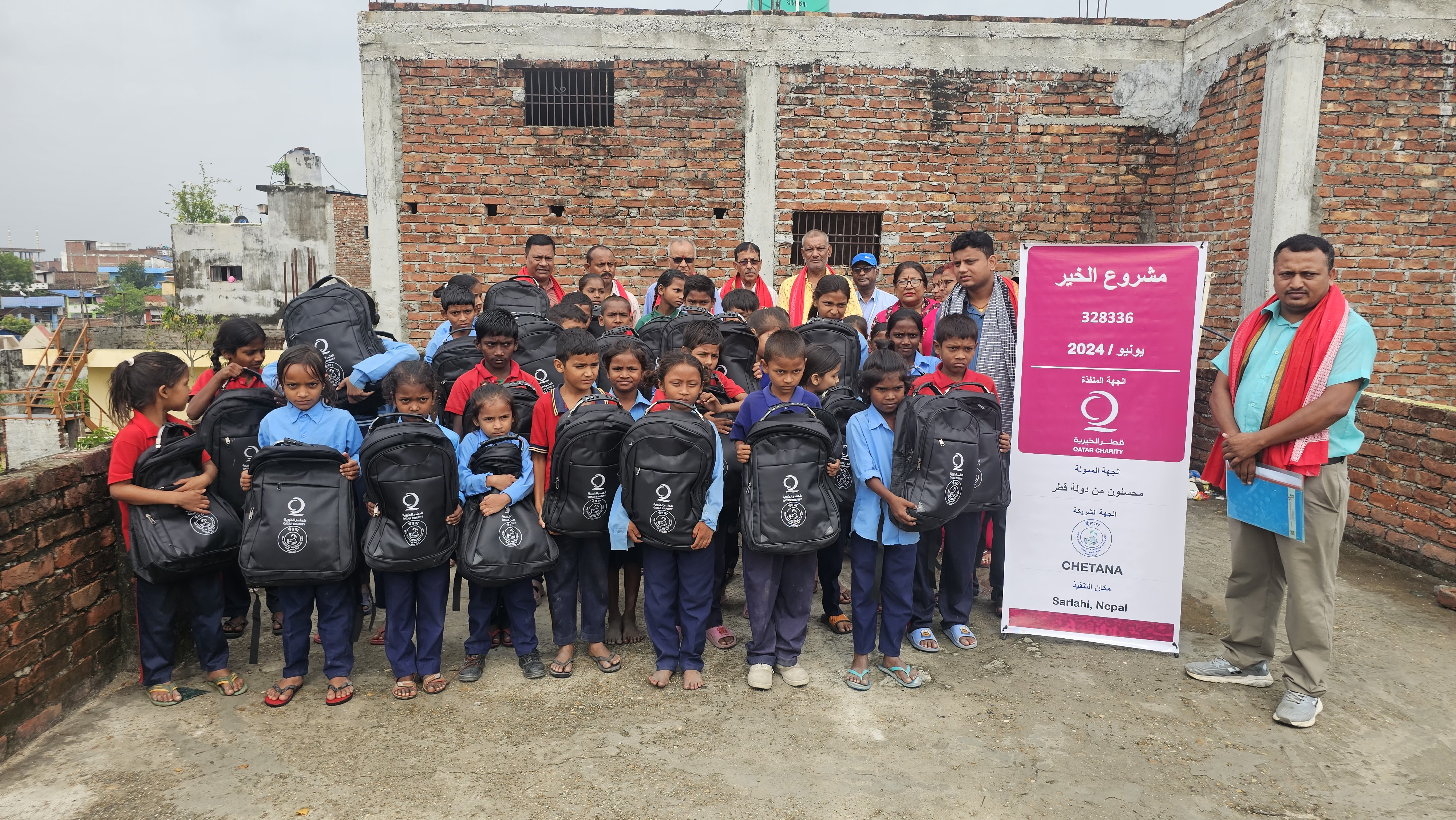
of Teaching–Learning Process for Quality Education: School Bag Support Project was
implemented in Malangwa Municipality with the
generous financial support of Qatar Charity and
local implementation by Chetana Sarlahi. The project
aimed to improve access to quality education by strengthening the
teaching–learning environment and reducing economic barriers that limit
students’ participation in school.
In many
rural and marginalized communities of Sarlahi District, children from
low-income households face difficulties continuing their education due to
poverty, lack of basic learning materials, and household economic pressures.
These challenges often lead to irregular attendance, poor academic performance,
and increased dropout rates. Recognizing this reality, the project focused on
providing essential educational materials to ensure that students could
participate effectively in classroom learning.
Under
this intervention, 70 students from one community school in
Malangwa Municipality received school bags equipped with essential
stationery items, including notebooks, pencils, water bottle and
Tiffin earning supplies. This support helped address immediate material needs of
students, enabling them to attend school with dignity and confidence. By
reducing the financial burden on parents, the project supported households
struggling to meet educational expenses.
The
distribution of school bags and stationery directly contributed to improving
the teaching–learning process in the school. Students were better prepared for
lessons, actively engaged in classroom activities, and able to complete
assignments and homework regularly. Teachers also reported improved classroom participation
and discipline, as students had the necessary tools to follow lessons
effectively. This created a more conducive learning environment and supported
teachers in delivering quality education.
One of
the key outcomes of the project was enhanced school enrollment and
attendance, which contributed to a reduction in dropout rates. The
provision of learning materials acted as a motivation for both students and
parents, reinforcing the value of education and encouraging regular school
attendance. The intervention also supported child protection objectives by
reducing the risk of child labor and early school withdrawal.
Chetana ensured
transparent implementation through coordination with school management
committees, teachers, and local authorities. Beneficiary selection was carried
out based on vulnerability criteria, prioritizing children from poor and
marginalized households. Community participation throughout the process
strengthened local ownership and accountability.